Rig Marine Solutions provides professional Non-Destructive Testing (NDT) services aimed at evaluating the integrity of materials and structures without inflicting damage. Employing cutting-edge methods and modern tools, our expert inspectors deliver precise, dependable results that contribute to maintaining safety and adherence in multiple sectors.
We provide assurance that your requirements and those of your assets are examined to the utmost standard, enabling you to uphold compliance with your industry's regulations.
Our group of technicians can perform an initial visual assessment, then proceed with a more thorough examination utilizing further non-destructive testing methods like Ultrasonic Testing or Magnetic Particle Inspection on location.
Learn more about how we can assist you by reaching out to our team today.
Even though they may seem basic, visual inspections are crucial for initiating the non-destructive testing process. We employ an assortment of techniques to examine your assets to identify specific areas of interest. Visual assessments serve as an effective beginning for a range of inspections across an entire site or specific asset.
We utilize technology like robotic crawlers, borescopes, and UAVs (Unmanned Aerial Vehicles) to perform visual inspections of your parts.
Borescopes are especially useful for examining engines and turbines. This approach helps avoid excessive maintenance on turbines and lowers expenses.
Robotic crawlers enable us to inspect pipelines and storage tanks remotely, among other setups, while ensuring the safety of our team.
Get in touch to find out more
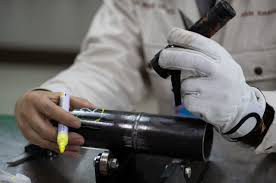
Positive Material Identification is often among the first non-destructive testing methods that companies ask about.
We recognize that your site managers and safety officers need to verify that all the elements on their site are made from the appropriate material. Gain the assurance you need that you are managing your assets correctly through our PMI services.
PMI is a technique for identifying the different elements of a particular substance. Typically, it is used to determine the exact components of metal alloys. This facilitates a better comprehension of the asset's advantages and disadvantages.
It is portable, enabling us to offer this service both onsite and within the organization. Two methods for identifying materials include the X-ray Fluorescence (XRF) analyzer and Optical Emission Spectroscopy (OES).
This method is employed across different sectors and can be vital for maintaining components and complying with safety standards. It allows businesses to confirm whether particular assets are made from suitable materials and produced to the right specifications to meet safety requirements.
Although the X-ray Fluorescence Analyser is the most adaptable and portable of the PMI techniques, it is unable to measure the carbon content in the structure, rendering it inadequate for materials that may include this element. Optical Emission Spectroscopy can be applied to materials that may contain carbon. Although this technology lacks the portability of XRF, specific setups can be made to use this equipment at your site.
Get in touch to find out more
With extensive experience in the field, our team ensures that your assets meet the highest safety and compliance standards.
To enhance your productivity, we can carry out our magnetic particle inspection services internally under certain conditions. Feel free to contact us if you have any inquiries about our services.
Our goal is a rapid response for reporting, offering you an exceptionally fast inspection service.
Magnetic Particle Inspection (MPI) is employed to detect surface defects in ferromagnetic (magnetic) materials. A magnetic field is generated inside the component, utilizing a magnetic powder that contains particles. The magnetic flux penetrates any defects and attracts the particles, highlighting any shortcomings.
MPI is usually used to detect defects on surfaces, such as toe cracks and crater cracks. It also allows for the identification of areas with porosity. It is a simple, portable method suitable for castings, shafts, and welds. It delivers quick results and can detect imperfections up to 2mm below the surface.
This method requires surfaces to be clean before testing begins. It might also require a power source and uses combustible liquids, which could render it unsuitable for certain areas on site. MPI cannot be used on non-ferromagnetic materials.
For storage tanks and pressure vessels, For piping, For forged products, castings, and shafts, For welds, including those in structural steel and high-pressure environments, For structural steel, For heat exchangers and boilers.
Get in touch to find out more
Your assets must be maintained to the highest safety standards, and we help you meet your industry's compliance requirements through our thorough and adaptable testing services. We provide comfort and address every inquiry with transparent truthfulness. For more information about any of our services, don't hesitate to contact our varied team.
To ensure your operation operates as efficiently as possible, we offer Dye Penetrant Inspection both at our Deeside facility and onsite.
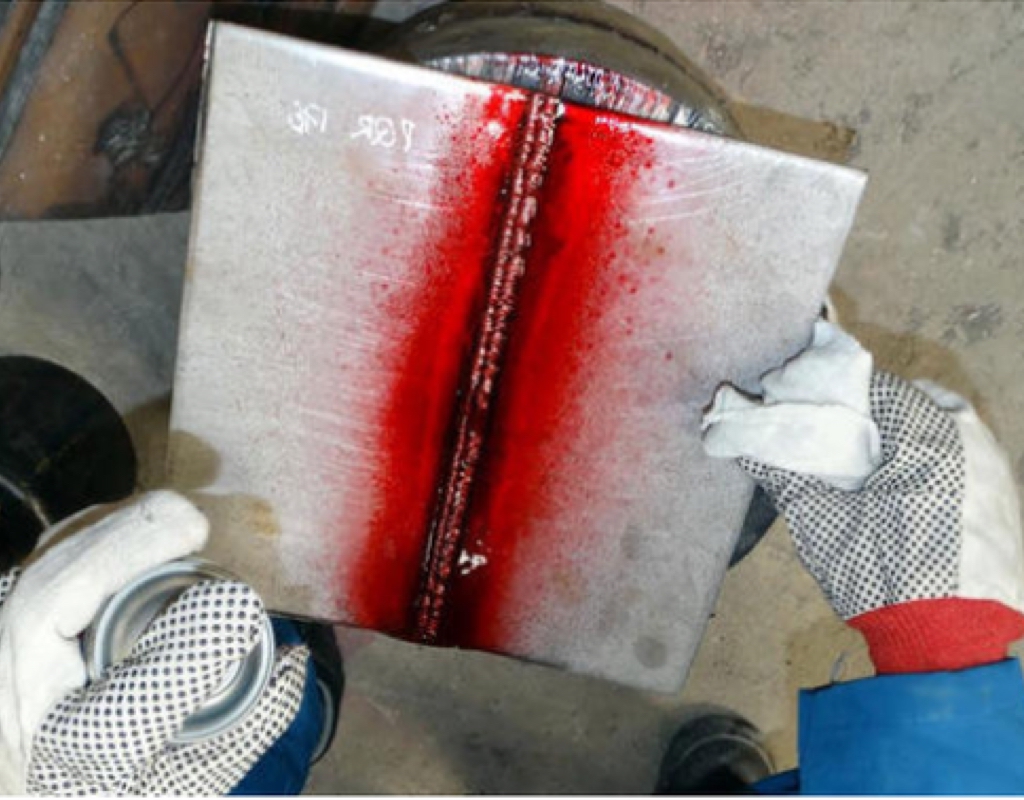
Our Dye Penetrant Inspection (DPI) service aims to detect surface-breaking defects by using a dye to highlight cracks, which are then examined under various lighting conditions. This method is quick and cost-effective.
Typically, DPI is used on non-ferromagnetic materials—substances that do not exhibit magnetism and do not contain iron. While our technicians sometimes use this method for ferromagnetic materials, they generally prefer magnetic particle inspection in such cases.
DPI is frequently employed to assess shafts, castings, welds, and minor machined components. This straightforward and convenient method is effective in detecting surface defects and surface porosity. Additionally, it is used to identify cracks and crater-like breaks.
This non-invasive testing method can only detect flaws that penetrate the surface and requires a clean surface before inspection. Moreover, it relies on temperature, making it unsuitable for cold environments.
This service is ideal for inspecting storage tanks, pressure vessels, and small metal components. It is also perfect for examining welds, joints in structural steel, and welds under high-pressure conditions. Moreover, it can be effectively employed for inspecting shafts, minor machined components, heat exchangers, and boilers.
Get in touch to find out more
Our team can help you through the process of verifying that you have the correct service for your location. We acknowledge the highly stringent standards that your industry must maintain at every stage, and we strive to work together with you to ensure that your assets are protected and meet regulatory requirements.
Contact us today for a free consultation and explore how our Eddy Current Inspection services can benefit you. Our aim is to address every question with complete transparency, and we are eager to start a cooperative partnership with you.
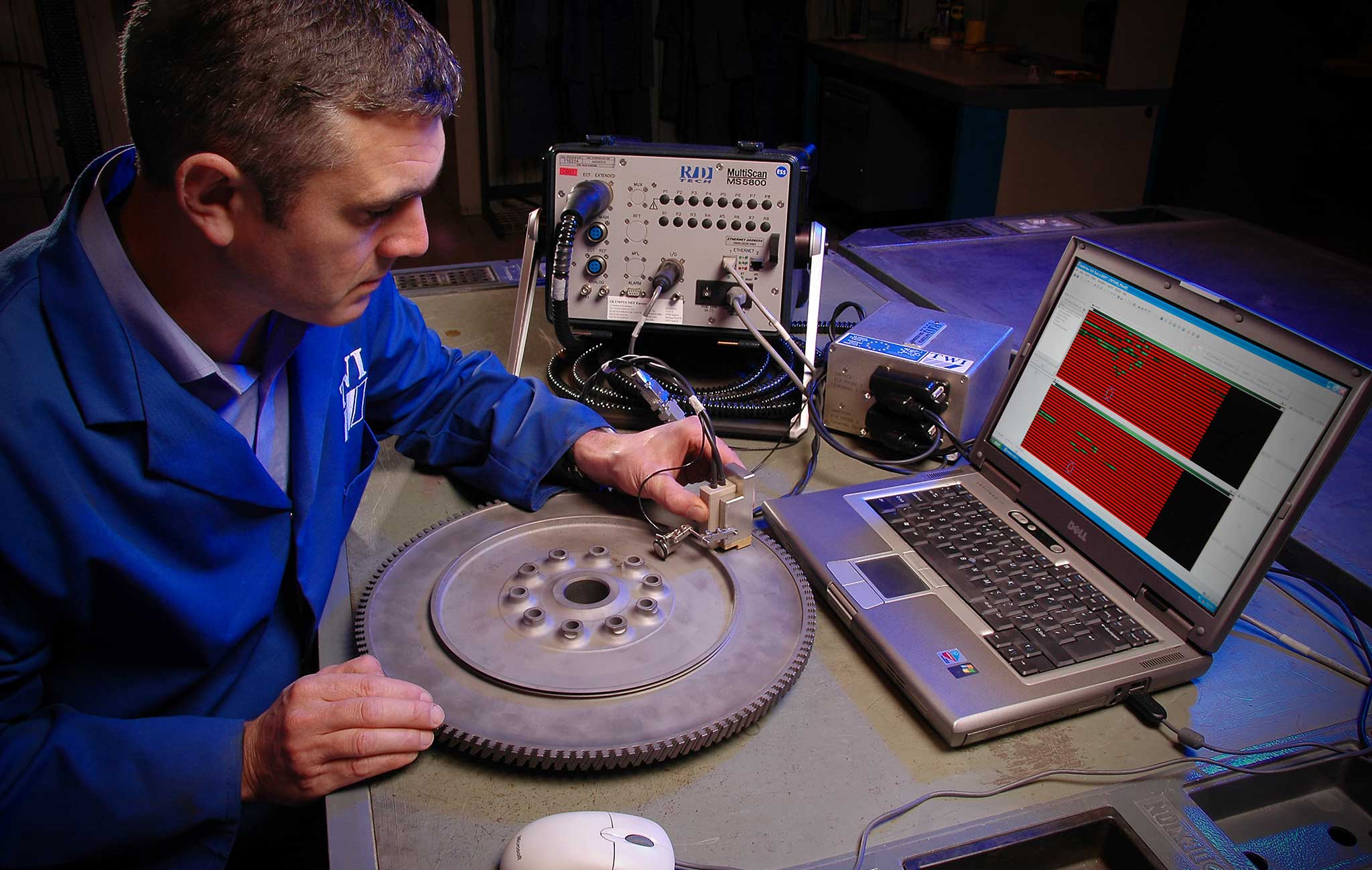
Eddy Current Testing (EC) uses electromagnetic concepts to detect surface flaws. Flaws cause changes in the conductivity of the material, allowing the probe to identify problematic areas. This is a portable technique appropriate for coated surfaces, and advanced EC systems can provide enduring records of inspection data. The technique yields prompt results, needing little surface preparation.
EC is used to detect pitting, surface fatigue fractures, and stress corrosion cracks in tubes and pipes.
This method is frequently used in the aerospace industry for examining aircraft fuselage and wings. In the nuclear sector, it can be used to assess steam generator tubing in nuclear power plants. Heat exchanger tubes in power and petrochemical plants can also be evaluated using EC.
This type of non-destructive testing is applicable solely to conductive materials, and any detected defects must be confirmed with additional inspection methods, like Magnetic Particle Inspection.
If you are employed in the aerospace, petrochemical, or nuclear industries, or require testing for a steam generator or heat exchanger, don’t hesitate to contact.
This service is suitable for storage tanks, pressure vessels, and small metal components, as well as pipe work. It is also ideal for welds, including those in structural steel and high-pressure environments, aircraft fuselages and wings, and heat exchangers and boilers.
Get in touch to find out more
Our team's objective is to offer reassurance to our clients. We will help you maintain compliance requirements and safety standards throughout your site. To suit your site’s operational hours and needs, our ultrasonic inspection can be conducted in-house at our facility under certain circumstances.
Our aim is to answer every question honestly and straightforwardly. If you think you may need our ultrasonic testing services but are unsure, contact us today for more information.
Ultrasonic Testing (UT) utilizes ultrasonic waves to identify internal defects in various materials. It applies to most materials.
UT is capable of detecting corrosion, thinning, and internal flat defects. It also identifies cracks and gaps and is useful for analyzing pressure vessels, storage tanks, and welds in high-pressure environments. This method is advantageous for analyzing forgings, castings, and welds in structural steel.
It can evaluate thickness by examining the paint on the surface. It can thoroughly penetrate substances and deliver instant outcomes, allowing for rapid report creation.
UT exclusively detects flaws in a material and is often employed alongside surface examination techniques such as Magnetic Particle Inspection. When assessing welds, a minimum material thickness may be required. Furthermore, surface dirt can influence the quality of the outcome, and unevenly shaped components can as well, indicating that the method may not be suitable for all assets. Additionally, the one-way characteristic of the probe's beam requires the probe to be moved manually to cover all parts.
If you're interested in our Ultrasonic Testing service but have questions, contact us today for further information. We are looking forward to your call.
This service is appropriate for storage tanks and pressure vessels, piping systems, structural steel, and welds in both high-pressure settings and structural steel. It is equally suitable for castings, forgings, shafts, and boilers along with heat exchangers.
Get in touch to find out more